
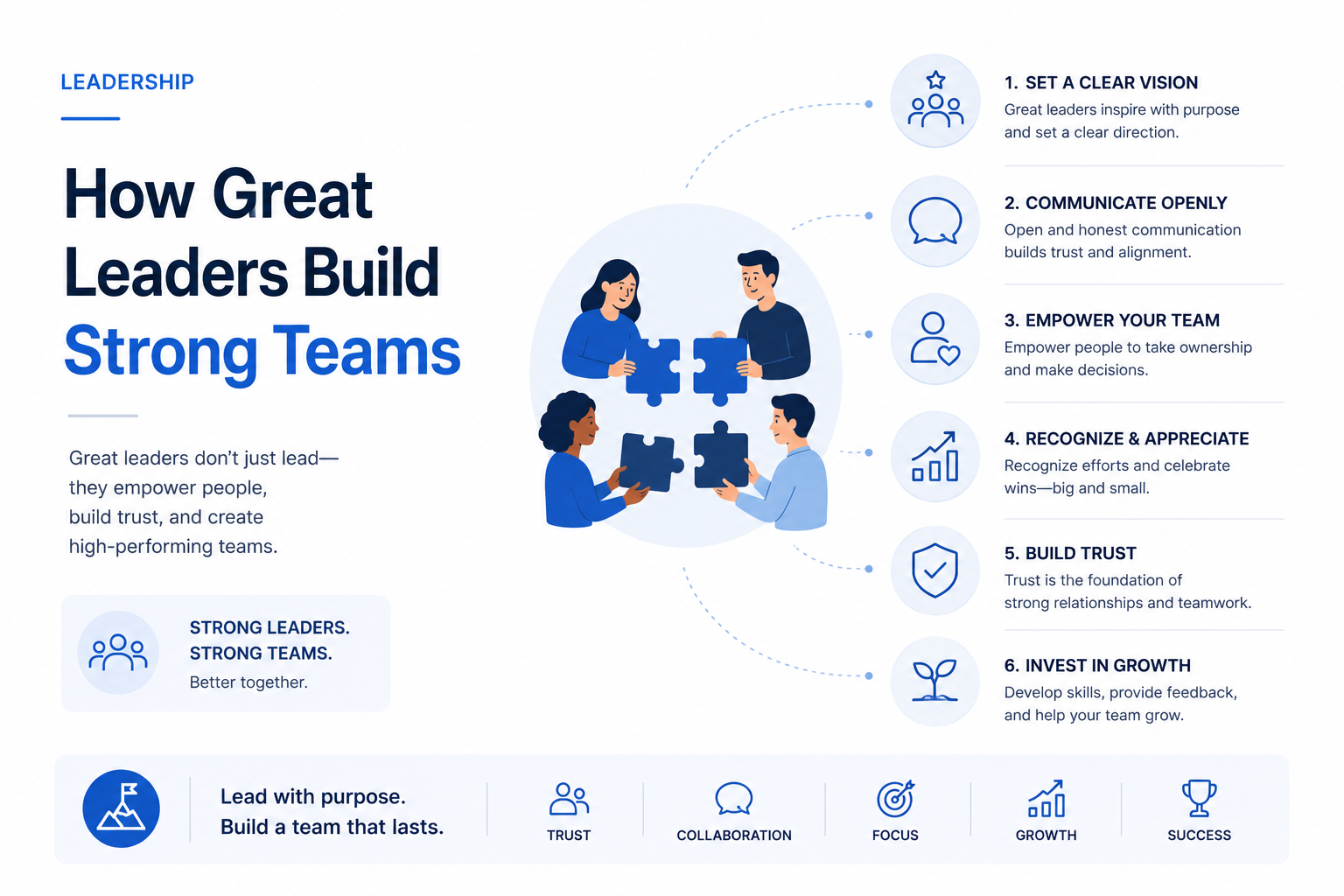
Discover how effective team leadership helps businesses build strong, motivated, and high-performing teams. Learn key leadership strategies that drive collaboration and success.
How Great Leaders Build Strong Teams
Behind every successful business is a strong team working toward a common goal. While talent and experience are important, effective team leadership is often the factor that transforms a group of individuals into a high-performing and productive team.
Great leaders understand that building strong teams requires more than assigning tasks and managing performance. It involves creating a culture of trust, communication, accountability, and collaboration that enables employees to perform at their best.
As businesses face increasing competition and rapid change, strong team leadership has become a critical driver of organizational success.
What Is Team Leadership?
Team leadership is the ability to guide, motivate, and support a group of individuals in achieving shared objectives. Effective leaders help team members align their efforts with organizational goals while fostering a positive and productive work environment.
Strong team leaders focus on:
- Clear communication
- Collaboration
- Employee development
- Problem-solving
- Performance improvement
- Relationship building
Their goal is to help both individuals and the organization succeed.
Why Team Leadership Matters
Businesses with strong leadership often experience:
- Higher employee engagement
- Improved productivity
- Better communication
- Stronger workplace culture
- Increased innovation
- Greater employee retention
When teams are motivated and aligned, they are more likely to contribute to long-term business growth and success.
Key Ways Great Leaders Build Strong Teams
1. Establish a Clear Vision
Strong teams need clear direction.
Great leaders communicate:
- Organizational goals
- Team objectives
- Expectations
- Priorities
When employees understand the purpose behind their work, they are more motivated to contribute meaningfully.
2. Build Trust Through Consistency
Trust is the foundation of every successful team.
Leaders build trust by:
- Keeping commitments
- Acting with integrity
- Being transparent
- Treating employees fairly
A trustworthy leader creates an environment where team members feel confident and supported.
3. Encourage Open Communication
Effective communication is one of the most important leadership skills.
Great leaders create opportunities for employees to:
- Share ideas
- Ask questions
- Raise concerns
- Provide feedback
Open communication improves collaboration and reduces misunderstandings.
4. Empower Team Members
Successful leaders do not micromanage every task.
Instead, they:
- Delegate responsibilities
- Encourage decision-making
- Provide autonomy
- Support professional growth
Empowered employees often demonstrate greater confidence, creativity, and accountability.
5. Recognize and Appreciate Contributions
Employees who feel valued are more likely to remain engaged and motivated.
Great leaders regularly recognize:
- Individual achievements
- Team accomplishments
- Innovative ideas
- Consistent performance
Recognition fosters a positive workplace culture and strengthens team morale.
6. Promote Collaboration
Strong teams work together effectively to solve problems and achieve goals.
Leaders encourage collaboration by:
- Breaking down silos
- Encouraging knowledge sharing
- Supporting teamwork
- Creating inclusive environments
Collaboration often leads to better outcomes and stronger relationships among team members.
7. Invest in Employee Development
Great leaders understand that team success depends on continuous learning.
They support development through:
- Training programs
- Mentorship opportunities
- Skill-building initiatives
- Career advancement planning
Investing in employees helps organizations build stronger and more capable teams.
8. Address Challenges Quickly
Conflict and challenges are inevitable in any workplace.
Effective leaders address issues by:
- Listening objectively
- Facilitating constructive discussions
- Identifying solutions
- Maintaining professionalism
Timely problem-solving prevents small issues from becoming larger obstacles.
9. Lead by Example
Employees often mirror the behavior of their leaders.
Great leaders demonstrate:
- Accountability
- Professionalism
- Work ethic
- Respect
- Commitment
Leading by example helps establish standards that positively influence team culture.
10. Create a Positive Work Environment
A supportive workplace encourages productivity and engagement.
Leaders contribute to positive environments by:
- Promoting respect
- Encouraging inclusion
- Supporting work-life balance
- Prioritizing employee well-being
Positive cultures help teams remain motivated and resilient.
Essential Team Leadership Skills
Communication
Strong communication keeps teams aligned and informed.
Emotional Intelligence
Understanding emotions helps leaders build stronger relationships and navigate workplace dynamics.
Decision-Making
Effective leaders make informed decisions that support team and organizational goals.
Adaptability
Flexible leaders respond effectively to changing circumstances and challenges.
Conflict Resolution
The ability to manage disagreements constructively strengthens team cohesion.
Common Leadership Mistakes That Weaken Teams
Even experienced leaders can encounter challenges.
Common mistakes include:
- Micromanaging employees
- Poor communication
- Ignoring feedback
- Failing to recognize contributions
- Avoiding difficult conversations
- Lack of transparency
Addressing these issues can significantly improve team performance and morale.
How Strong Teams Contribute to Business Success
High-performing teams provide numerous benefits, including:
- Increased productivity
- Better customer service
- Faster problem-solving
- Greater innovation
- Improved operational efficiency
Organizations with strong teams are often more adaptable and competitive in dynamic markets.
The Future of Team Leadership
As workplaces continue evolving, leadership approaches must adapt to new realities.
Future leaders will increasingly focus on:
- Hybrid and remote workforce management
- Digital collaboration tools
- Employee well-being
- Diversity and inclusion
- Continuous learning
- Technology integration
Leaders who embrace these priorities will be better equipped to build strong and resilient teams.
Conclusion
Team leadership plays a crucial role in organizational success. Great leaders build strong teams by establishing clear goals, fostering trust, encouraging collaboration, and supporting employee growth.
By developing effective leadership habits and creating positive work environments, businesses can improve performance, strengthen workplace culture, and achieve sustainable growth.
The strongest teams are not created by chance—they are built through intentional leadership, consistent communication, and a commitment to helping people succeed together.
