

Learn about the most common cybersecurity risks facing businesses today and discover practical strategies to protect your company, data, customers, and operations from cyber threats.
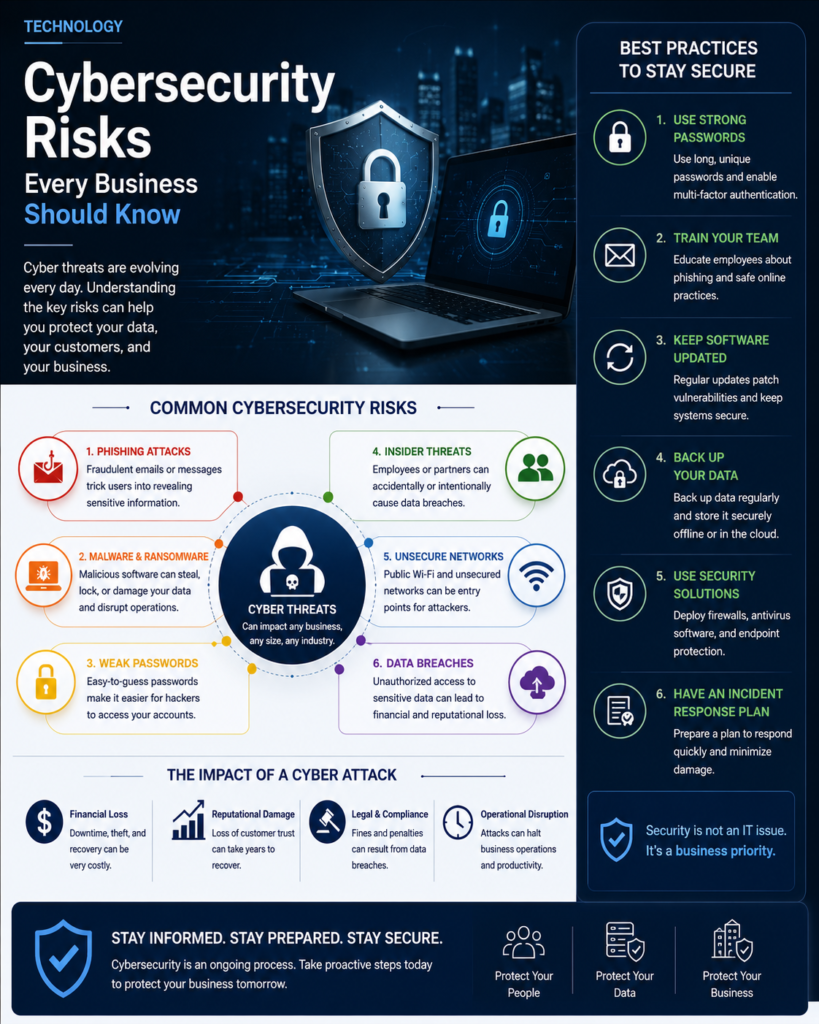
Cybersecurity Risks Every Business Should Know
As businesses become increasingly dependent on digital technologies, cybersecurity has become a critical component of business success. From customer databases and financial records to cloud platforms and communication systems, organizations rely on technology to manage daily operations and drive growth.
However, greater connectivity also creates new risks. Cybercriminals continue to develop sophisticated methods for targeting businesses of all sizes, making cybersecurity a top priority for business leaders worldwide.
Understanding the most common cybersecurity risks can help organizations strengthen their defenses, reduce vulnerabilities, and protect valuable business assets.
Why Cybersecurity Matters for Businesses
Cybersecurity involves protecting systems, networks, applications, and data from unauthorized access, attacks, and disruption.
Strong cybersecurity practices help businesses:
- Protect sensitive information
- Maintain customer trust
- Prevent financial losses
- Ensure business continuity
- Meet regulatory requirements
- Reduce operational risks
A single cyber incident can disrupt operations, damage a company’s reputation, and result in significant financial consequences.
The Growing Importance of Cybersecurity for Business
Digital transformation, remote work, cloud computing, and online transactions have expanded the digital footprint of many organizations.
As a result, businesses face increasing exposure to:
- Data breaches
- Ransomware attacks
- Phishing scams
- Insider threats
- System disruptions
Organizations that proactively address cybersecurity risks are better positioned to protect their operations and maintain long-term resilience.
Common Cybersecurity Risks Every Business Should Know
1. Phishing Attacks
Phishing remains one of the most common cyber threats affecting businesses.
Cybercriminals use deceptive emails, messages, or websites to trick employees into revealing:
- Passwords
- Financial information
- Customer data
- System access credentials
How to Reduce the Risk
- Train employees regularly
- Verify suspicious communications
- Implement multi-factor authentication
- Use email security solutions
Employee awareness is often the first line of defense against phishing attacks.
2. Ransomware Attacks
Ransomware is malicious software that encrypts business data and demands payment in exchange for restoring access.
These attacks can result in:
- Operational downtime
- Data loss
- Financial disruption
- Reputational damage
How to Reduce the Risk
- Maintain regular backups
- Update software frequently
- Restrict unauthorized access
- Implement endpoint security solutions
Strong backup strategies can significantly reduce the impact of ransomware incidents.
3. Data Breaches
Data breaches occur when unauthorized individuals gain access to sensitive information.
Compromised data may include:
- Customer records
- Employee information
- Financial data
- Intellectual property
How to Reduce the Risk
- Encrypt sensitive data
- Implement access controls
- Monitor network activity
- Conduct regular security audits
Protecting data is essential for maintaining customer trust and regulatory compliance.
4. Weak Password Practices
Weak or reused passwords remain a major security vulnerability.
Poor password management can allow attackers to gain unauthorized access to systems and accounts.
How to Reduce the Risk
- Require strong passwords
- Use password managers
- Implement multi-factor authentication
- Enforce password update policies
Strong authentication practices significantly improve security.
5. Insider Threats
Not all cybersecurity threats originate from external attackers.
Insider risks may involve:
- Negligent employees
- Unauthorized data sharing
- Misuse of access privileges
- Human error
How to Reduce the Risk
- Limit access based on roles
- Monitor sensitive systems
- Provide cybersecurity training
- Establish clear security policies
Effective governance helps minimize insider-related risks.
6. Unpatched Software and Systems
Outdated software often contains vulnerabilities that attackers can exploit.
Organizations that delay updates increase their exposure to cyber threats.
How to Reduce the Risk
- Apply security updates promptly
- Maintain patch management processes
- Regularly review system configurations
Keeping systems updated is one of the simplest and most effective security measures.
7. Cloud Security Risks
Cloud services provide flexibility and scalability, but they also require proper security controls.
Common cloud-related risks include:
- Misconfigured settings
- Unauthorized access
- Data exposure
- Weak user permissions
How to Reduce the Risk
- Implement strong access controls
- Monitor cloud environments
- Encrypt sensitive information
- Follow cloud security best practices
Secure cloud management is essential for protecting digital assets.
8. Third-Party Vendor Risks
Many businesses rely on external vendors, software providers, and service partners.
A security weakness within a third-party provider can expose your organization to risk.
How to Reduce the Risk
- Evaluate vendor security practices
- Conduct due diligence reviews
- Establish security requirements
- Monitor vendor compliance
Third-party risk management should be part of every cybersecurity strategy.
The Business Impact of Cybersecurity Incidents
Cybersecurity incidents can affect businesses in several ways:
Financial Losses
Organizations may face recovery costs, legal expenses, fines, and lost revenue.
Operational Disruption
Attacks can interrupt critical business functions and reduce productivity.
Reputational Damage
Customers may lose trust in businesses that fail to protect sensitive information.
Regulatory Consequences
Data protection regulations increasingly require organizations to implement adequate security measures.
The impact of a cyber incident often extends far beyond the immediate technical issue.
Best Practices for Strengthening Cybersecurity
Businesses can improve cybersecurity by implementing the following measures:
Employee Training
Educate staff on cyber threats, phishing risks, and security best practices.
Multi-Factor Authentication
Add an additional layer of protection beyond passwords.
Regular Security Assessments
Identify vulnerabilities before attackers can exploit them.
Data Backup and Recovery Planning
Maintain secure backups and test recovery procedures regularly.
Access Control Management
Limit access to sensitive systems and information.
Continuous Monitoring
Monitor networks and systems for suspicious activity.
A proactive approach helps organizations stay ahead of emerging threats.
How Citrix Project Development Consultant LLC Supports Business Security
As businesses continue their digital transformation journeys, cybersecurity should be integrated into every stage of growth and operational planning.
Citrix Project Development Consultant LLC helps organizations strengthen business resilience through strategic consulting, operational assessments, and technology-focused business solutions. By supporting businesses in identifying risks, improving processes, and implementing growth strategies, Citrix helps companies build stronger foundations for long-term success.
Businesses that prioritize cybersecurity as part of their overall business strategy are better equipped to navigate modern challenges and maintain operational stability.
The Future of Cybersecurity for Business
Cybersecurity will continue evolving as technology advances and threats become more sophisticated.
Emerging areas of focus include:
- Artificial intelligence-driven security
- Zero-trust security frameworks
- Advanced threat detection
- Cloud security enhancements
- Cyber resilience planning
- Data privacy compliance
Organizations that invest in cybersecurity today will be better prepared for the challenges of tomorrow.
Conclusion
Cybersecurity is no longer just an IT concern—it is a business priority. From phishing attacks and ransomware to data breaches and cloud security risks, organizations face a wide range of threats that can impact operations, finances, and reputation.
By implementing strong cybersecurity practices, educating employees, and adopting proactive risk management strategies, businesses can significantly reduce their exposure to cyber threats. As digital transformation continues to accelerate, cybersecurity for business will remain essential for protecting assets, maintaining customer trust, and supporting sustainable growth.
Businesses that take cybersecurity seriously today are building stronger, more resilient organizations for the future.
