
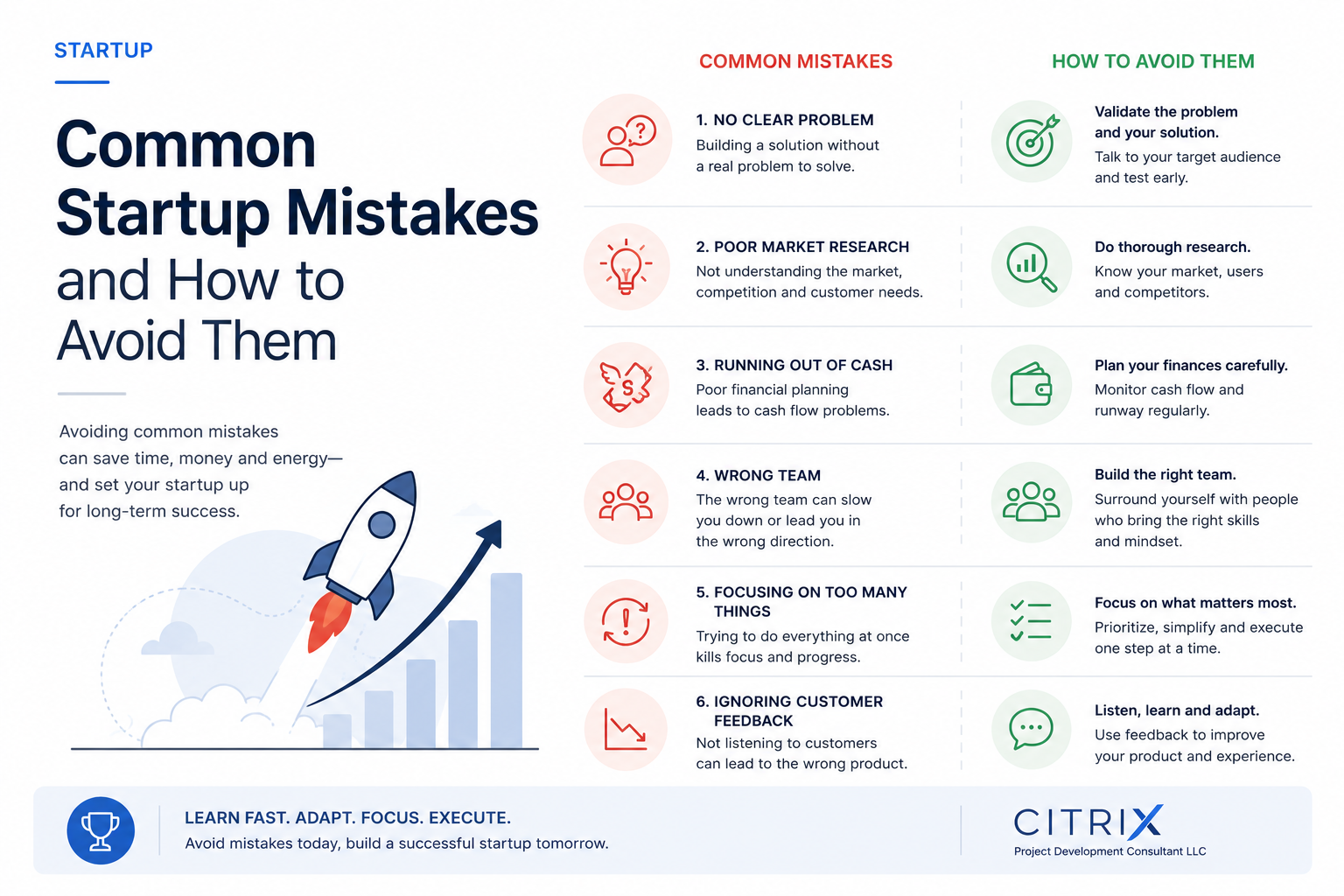
Learn the most common startup mistakes entrepreneurs make and discover practical strategies to avoid them. Build a stronger foundation for long-term business success.
Common Startup Mistakes and How to Avoid Them
Launching a startup is an exciting journey filled with opportunities, innovation, and ambition. However, many startups face significant challenges during their early stages, and some fail because of avoidable mistakes rather than a lack of potential.
Understanding common startup mistakes can help entrepreneurs make smarter decisions, reduce risks, and improve their chances of building a successful and sustainable business. While every startup is unique, many founders encounter similar obstacles that can slow growth or threaten long-term success.
Why Startups Struggle
Startups operate in highly competitive environments where resources are often limited. New businesses must balance product development, customer acquisition, financial management, and operational efficiency while adapting to changing market conditions.
The good news is that many startup challenges can be anticipated and managed with proper planning and execution.
1. Starting Without Market Research
One of the most common startup mistakes is launching a product or service without fully understanding the target market.
Some entrepreneurs assume there is demand for their idea without validating it through research.
Risks
- Low customer interest
- Poor product-market fit
- Difficulty generating revenue
- Wasted resources
How to Avoid It
Before launching:
- Study your target audience
- Analyze competitors
- Identify customer pain points
- Validate demand through surveys or pilot programs
Market research provides valuable insights that support informed decision-making.
2. Trying to Serve Everyone
Many startups attempt to target broad audiences in hopes of attracting more customers.
In reality, unclear positioning often weakens marketing efforts and makes it difficult to stand out.
Risks
- Confusing brand messaging
- Inefficient marketing campaigns
- Lower customer engagement
How to Avoid It
Define a clear target audience and focus on solving specific problems for that group.
Businesses that serve a well-defined niche often gain traction faster.
3. Poor Financial Planning
Financial challenges remain one of the leading causes of startup failure.
Common issues include:
- Underestimating expenses
- Overestimating revenue
- Inadequate cash flow management
- Excessive spending
How to Avoid It
Develop realistic financial projections and regularly monitor:
- Cash flow
- Operating expenses
- Profit margins
- Growth investments
Financial discipline creates stability and supports long-term growth.
4. Ignoring Customer Feedback
Customers provide valuable insights that can improve products and services.
Startups that ignore feedback risk developing solutions that fail to meet market needs.
How to Avoid It
Create systems for gathering feedback through:
- Surveys
- Reviews
- Customer interviews
- Support interactions
Use this information to guide product improvements and business decisions.
5. Lack of a Clear Business Plan
Some entrepreneurs focus entirely on product development while neglecting strategic planning.
Without a business plan, startups may struggle with:
- Goal setting
- Resource allocation
- Growth strategies
- Performance measurement
How to Avoid It
Develop a comprehensive business plan that outlines:
- Objectives
- Revenue models
- Marketing strategies
- Operational plans
- Growth targets
A roadmap helps keep the business focused and aligned.
6. Hiring Too Quickly
Building a team is important, but hiring prematurely can create financial strain and operational challenges.
Risks
- Increased expenses
- Role confusion
- Cultural misalignment
How to Avoid It
Hire strategically based on business needs and growth priorities.
Focus on finding individuals whose skills and values align with the company’s goals.
7. Neglecting Marketing
Many startups invest heavily in product development but fail to create awareness.
Even exceptional products require visibility to attract customers.
How to Avoid It
Invest in marketing activities such as:
- Search engine optimization (SEO)
- Content marketing
- Social media marketing
- Email campaigns
- Digital advertising
Consistent marketing supports customer acquisition and brand growth.
8. Failing to Differentiate from Competitors
Highly competitive markets require businesses to offer clear value propositions.
Without differentiation, startups may struggle to attract attention.
How to Avoid It
Identify what makes your business unique.
This could include:
- Better service
- Innovative features
- Competitive pricing
- Specialized expertise
- Superior customer experience
Strong differentiation strengthens market positioning.
9. Resisting Change
Market conditions, customer preferences, and technologies evolve rapidly.
Startups that refuse to adapt often lose relevance.
How to Avoid It
Stay informed about:
- Industry trends
- Customer behavior
- Emerging technologies
- Competitive developments
Adaptability helps businesses remain competitive and responsive.
10. Trying to Do Everything Alone
Many founders believe they must handle every aspect of the business themselves.
While dedication is important, excessive self-reliance can limit growth.
Risks
- Burnout
- Slower decision-making
- Reduced productivity
How to Avoid It
Delegate responsibilities, seek mentorship, and leverage external expertise when necessary.
Building a support network strengthens leadership effectiveness.
Signs Your Startup May Be Making Costly Mistakes
Entrepreneurs should pay attention to warning signs such as:
- Declining customer interest
- Cash flow problems
- Slow growth
- High employee turnover
- Poor customer retention
- Unclear business direction
Recognizing challenges early allows businesses to make corrections before problems escalate.
Best Practices for Startup Success
To improve the likelihood of success, startups should focus on:
Customer-Centric Thinking
Build products and services around customer needs.
Strategic Planning
Set measurable goals and monitor progress consistently.
Financial Discipline
Manage resources carefully and prioritize sustainable growth.
Continuous Learning
Stay informed about market trends and business best practices.
Adaptability
Be willing to refine strategies as circumstances evolve.
These principles help create a strong foundation for long-term growth.
The Importance of Learning from Mistakes
Mistakes are a natural part of entrepreneurship. Many successful business leaders have experienced setbacks before achieving growth.
The key is not avoiding every mistake but learning quickly, adapting effectively, and continuously improving.
Startups that embrace learning and innovation are often better positioned to overcome challenges and achieve success.
Conclusion
Startup mistakes can be costly, but many are preventable. By conducting market research, managing finances carefully, listening to customers, investing in marketing, and maintaining flexibility, entrepreneurs can reduce risks and improve their chances of success.
Building a successful startup requires strategic thinking, persistence, and a commitment to continuous improvement. Entrepreneurs who learn from common startup mistakes can create stronger businesses that are better prepared for sustainable growth and long-term success.
