
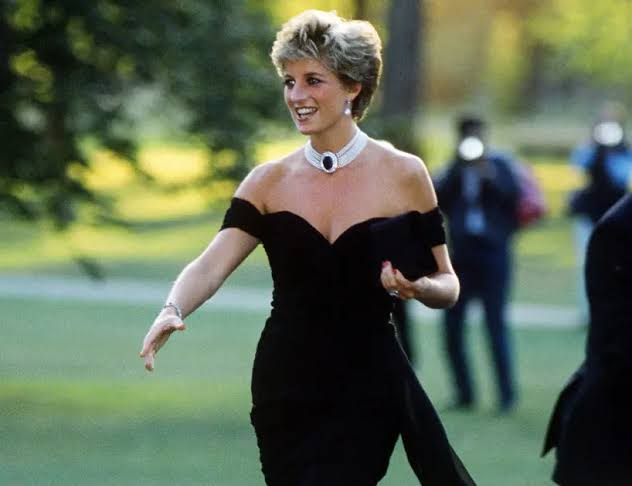
More than three decades after Princess Diana stepped out in one of the most memorable outfits in modern royal history, the black evening dress that became known worldwide as her “revenge dress” is back in the spotlight.
The Christina Stambolian dress was unveiled at Sotheby’s in London this week before beginning a global tour that will culminate in an auction in New York on December 9. Sotheby’s has placed an estimated value of $150,000 to $300,000 on the dress, which has remained in a private collection since it was sold at auction in 1997.
The return of the dress is attracting attention far beyond the world of fashion collecting. Its history connects celebrity culture, the British royal family, fashion and one of the most intensely documented personal stories of the 1990s.
The Night That Made the Dress Famous
Princess Diana wore the black dress on June 29, 1994, while attending an event at London's Serpentine Gallery. On the same evening, a television documentary featuring then-Prince Charles was broadcast in which he acknowledged infidelity during their marriage.
The timing transformed Diana's appearance into a cultural moment. Photographs of her arriving at the event quickly became some of the most recognisable images associated with her public life, and the outfit was eventually given the nickname that has followed it ever since: the “revenge dress.”
The nickname was not an official description from Diana herself. Rather, it emerged from the way newspapers, fashion commentators and the public interpreted her appearance — as an image of confidence during an extraordinarily difficult period in her personal life.
A Dress That Challenged Royal Expectations
The outfit was designed by Christina Stambolian and made from black silk crepe. Sotheby's describes it as featuring a pleated bodice, an off-the-shoulder neckline and an asymmetrically draped chiffon skirt with a train.
Its significance was amplified by the expectations surrounding royal fashion at the time. Diana had spent years appearing at official events in clothing carefully considered within the conventions of royal public life. The shorter, fitted and off-the-shoulder design represented a noticeably different image.
Fashion can communicate without a person saying anything, and that is central to why the dress has remained culturally relevant. What might otherwise have been remembered simply as a glamorous evening gown became associated with independence, personal transformation and control over one's public image.
Diana Had Owned the Dress for Years
The dress was not created specifically for that dramatic evening. Diana had acquired it earlier but had reportedly considered the design too daring to wear publicly at first.
That history has contributed to the mythology surrounding the outfit. The fact that it was already available in her wardrobe made the decision to wear it on June 29, 1994 particularly interesting to fashion historians and royal observers.
The moment demonstrates how the meaning of clothing can change depending on context. A black evening dress can simply be a black evening dress. Worn by one of the world's most photographed women during a major public moment in her marriage, it became something entirely different.
From Diana’s Wardrobe to a Private Collection
The dress later became part of the landmark 1997 auction of clothing from Diana's personal collection at Christie's in New York. The current owner acquired it at that sale, according to Sotheby's provenance information.
That auction took place only months before Diana died in Paris in August 1997. Her death at the age of 36 produced an extraordinary international reaction and transformed objects associated with her into pieces of cultural and historical significance.
Nearly three decades later, the same dress is returning to the auction market.
The December sale will therefore offer collectors something far more unusual than a vintage designer garment. Its value is connected to the identity of its former owner, the historical moment in which it was worn and the extraordinary afterlife of the photographs from that evening.
Sotheby’s Expects Up to $300,000
Sotheby's has given the dress a pre-sale estimate of between $150,000 and $300,000. The dedicated auction is scheduled for December 9 in New York.
The estimate illustrates the unusual market that exists around celebrity and historical fashion. Clothing associated with major cultural figures can attract collectors interested not simply in design but in provenance — the documented history of who owned or wore an object.
That distinction can dramatically affect value. Two garments from the same designer and period may command completely different prices if one was connected to a historically significant person or event.
Why Diana Still Attracts Global Attention
Princess Diana died nearly three decades ago, yet stories connected with her continue to generate international attention. Her fashion is regularly revisited, documentaries continue to examine her life, and younger audiences who were not alive during her most famous public appearances encounter her through streaming programmes and social media.
Part of that enduring interest comes from the unusual position she occupied between royalty and celebrity. Diana was a member of the British royal family, but she also developed an individual public identity that extended beyond traditional royal duties.
Her humanitarian work, relationships with the media and highly visible personal struggles helped create a level of public identification unusual for a royal figure.
The “revenge dress” fits naturally into that story because it has come to symbolise the moment when fashion appeared to become part of Diana's individual public voice.
Social Media Has Given the Moment Another Life
The phrase “revenge dress” has moved far beyond its original association with Diana. It is now commonly used in celebrity and fashion culture to describe a striking appearance following a breakup or highly publicised relationship problem.
Social media has accelerated that transformation. Archive photographs of Diana are regularly rediscovered and shared by younger audiences, while her outfits continue to inspire fashion discussions decades after they were originally worn.
The phenomenon demonstrates how digital culture can extend the lifespan of celebrity moments. Images that once circulated primarily through newspapers and magazines can now reappear repeatedly on Instagram, TikTok and other platforms, introducing historical fashion moments to entirely new generations.
Celebrity Fashion Has Become a Serious Collecting Market
The auction also reflects a broader trend in the collectibles industry. Items connected to famous entertainers, musicians, athletes and public figures can command extraordinary prices when they have strong provenance.
Collectors increasingly treat important clothing in a similar way to memorabilia, watches, jewellery and other historically significant objects. The appeal is partly financial, but it is also emotional. Owning an object connected to a widely remembered cultural moment offers something that a newly manufactured luxury product cannot replicate.
Auction houses understand this distinction, which is why provenance, photography and the story surrounding an item often become central parts of the sale.
The Dress Returns During Renewed Interest in Diana
The timing of the exhibition has added another layer to the story. Diana's legacy has returned to British headlines following claims made by her brother Charles Spencer in an upcoming book. Buckingham Palace has disputed allegations concerning King Charles's reaction following Diana's death.
Those claims are separate from the auction and remain contested. Their emergence, however, has contributed to renewed media discussion about Diana and her relationship with the royal family.
For the dress itself, the historical facts are clearer. Diana wore it in 1994, it became one of her most widely remembered fashion moments, it was sold from her collection in 1997, and it will return to auction this December.
More Than a Piece of Celebrity Clothing
The enduring fascination surrounding the dress demonstrates how certain objects become connected with much larger cultural stories.
Its fabric and design explain only part of its importance. The rest comes from timing, photography, celebrity and public interpretation.
For some people, the dress represents Diana's fashion influence. For others, it represents independence following the breakdown of a marriage. Fashion historians can view it as an example of clothing becoming a form of public communication, while collectors may see it as a rare piece of royal and celebrity history.
Those interpretations help explain why the dress continues to generate headlines more than 30 years after Diana wore it.
When the gown reaches Sotheby's auction room in New York on December 9, bidders will technically be competing for a Christina Stambolian evening dress.
What gives it an estimated value of as much as $300,000, however, is the story attached to it — and the enduring fascination with the woman who wore it.