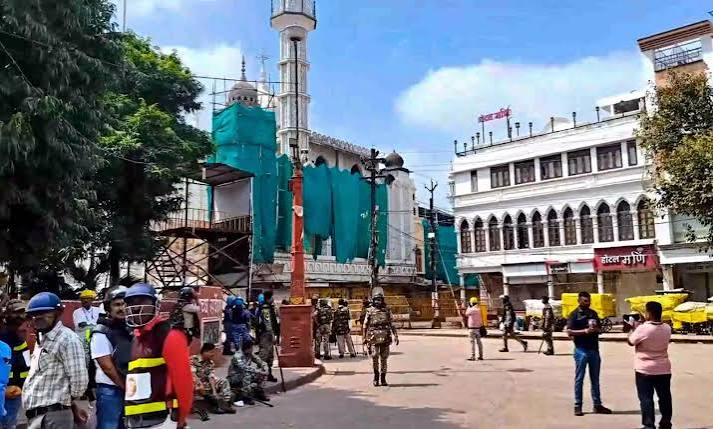
UJJAIN, India , On September 28, 2026 a confrontation between residents and security forces unfolded outside the Shahi Masjid in Ujjain, Madhya Pradesh, after municipal workers began removing part of the mosque that sits within the alignment of a planned road widening project. Videos and eyewitness accounts from the scene showed protesters throwing stones, police using tear gas and baton charges to disperse crowds, and local officials later saying arrests had been made as they sought to carry out the work.
What happened
The conflict began early on the morning of September 28 when workers accompanied by police personnel acted on an order to clear a small section of the mosque compound that the municipal corporation says encroached on the space needed to broaden a key street. The administration framed the operation as part of preparatory infrastructure work for the Simhastha religious fair scheduled in 2028, a large state and national logistical event that authorities say requires wider roads for pilgrim movement.
Residents and mosque committee members had gathered at the site in recent days to protest any removal, asserting the structure is a historic religious asset and that demolition was being attempted without adequate consultation. As crews began to dismantle the designated portion, tensions escalated and a group started pelting security personnel with stones. Police then responded with tear gas shells to control the crowd, according to multiple eyewitnesses and local officials at the site.
Authorities and community responses
Local police described the action as necessary to enforce a municipal plan that followed administrative approvals, and they said they intervened only after violence was reported. The magistrate of Ujjain indicated that law enforcement had detained several people for disorderly conduct and stone throwing. Officials also emphasised that the work targeted only a specific, legally identified segment of land, not the entire mosque.
Community leaders and members of the mosque committee disputed that account. They said an agreement reached the previous night had anticipated a different approach and that the sudden presence of heavy machinery and police early on Monday took many by surprise. Some residents said the removed portion included irreplaceable elements and cited archival documents they say show historical protections dating back decades.
Why the site matters
The Shahi Masjid is one of Ujjain’s longstanding places of worship, in a city better known for its ancient Hindu temples and as a major pilgrimage centre. That mix of religious histories makes any change to shared urban fabric particularly sensitive. The planned road upgrade is presented by the municipal corporation as necessary civic work, but it intersects a fraught area where heritage, religious sentiment and public planning meet.
With the Simhastha fair two years away, authorities have said they are accelerating infrastructure improvements across the city. Critics warn that accelerating projects close to religious sites without inclusive consultation risks inflaming social tensions at a time when authorities should be prioritising dialogue and transparent procedures.
Legal and political fallout
Local legal histories and property records are already being cited by both sides. Mosque representatives say they will pursue remedies in court and demand that any further work be stayed until heritage and religious bodies are consulted. Municipal officials say they have followed the necessary approvals and that the piece removed was within the legally acquired footprint for the road.
The episode has attracted attention among opposition politicians and civil society organisations who called for restraint and for the administration to avoid steps that could escalate into communal confrontations. At the same time, state authorities have signalled a commitment to maintain order and complete the projects slated for the city ahead of the pilgrimage season.
Broader implications
Incidents like the Ujjain clash highlight the balancing act Indian cities face as they modernise infrastructure in dense historic environments. They also underscore the political risks of conducting sensitive civic works in religious precincts, where even small physical changes can trigger larger communal anxieties.
For Ujjain the immediate challenge will be to stabilise tensions, ensure the safety of worshippers and residents, and find a procedural path forward that addresses heritage concerns while allowing necessary civic upgrades. How the administration, the courts and community leaders respond in the coming days will determine whether this episode becomes a contained civic dispute or a far broader flashpoint.
Local authorities said on September 28 they would review events at the site and promised an investigation into the clash. Community representatives called for an independent mediation mechanism and for any future actions at the mosque site to pause until those talks happen.