
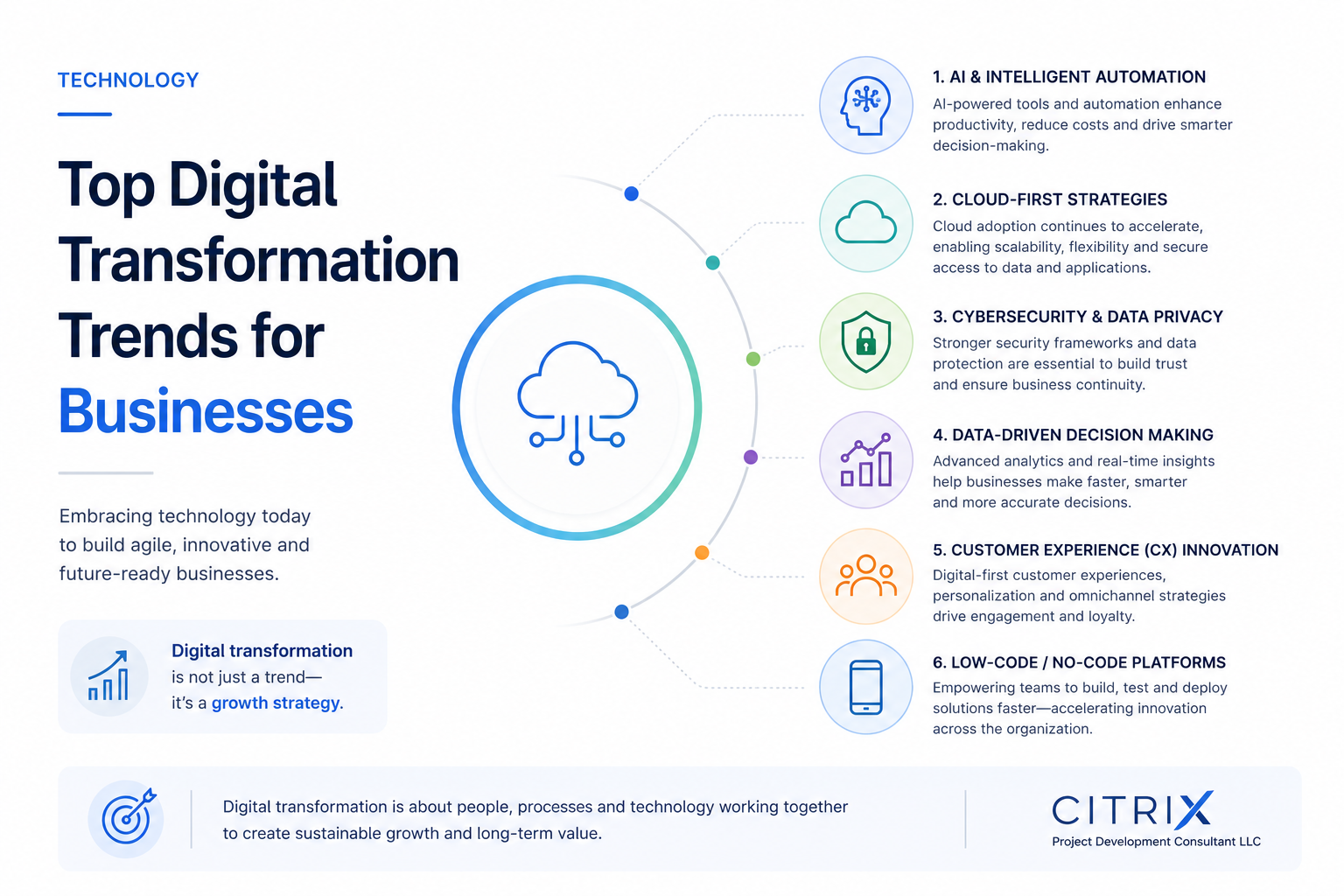
Discover the top digital transformation trends shaping businesses in 2026. Learn how technology, automation, AI, and cloud solutions are driving growth and innovation.
Top Digital Transformation Trends for Businesses
Digital transformation has become a critical priority for businesses seeking to remain competitive in a rapidly evolving marketplace. As technology continues to reshape industries, organizations are investing in innovative solutions that improve efficiency, enhance customer experiences, and support long-term growth.
From artificial intelligence and automation to cloud computing and data analytics, digital transformation is no longer limited to large corporations. Businesses of all sizes are embracing digital technologies to streamline operations and adapt to changing customer expectations.
Understanding the latest digital transformation trends can help organizations make informed decisions and prepare for future opportunities.
What Is Digital Transformation?
Digital transformation refers to the integration of digital technologies into business processes, operations, and customer interactions. It involves using technology to improve performance, increase efficiency, and create new ways of delivering value.
Rather than simply adopting new tools, digital transformation often requires organizations to rethink how they operate, serve customers, and achieve business objectives.
Why Digital Transformation Matters
Businesses that embrace digital transformation can benefit from:
- Improved operational efficiency
- Better customer experiences
- Faster decision-making
- Increased productivity
- Enhanced competitiveness
- Greater business agility
As markets become increasingly digital, organizations that delay transformation may struggle to keep pace with competitors.
Top Digital Transformation Trends in 2026
1. Artificial Intelligence Becomes Mainstream
Artificial Intelligence (AI) continues to be one of the most influential drivers of digital transformation.
Businesses are increasingly using AI to:
- Automate repetitive tasks
- Improve customer support
- Analyze large datasets
- Forecast trends
- Personalize customer experiences
AI-powered solutions help organizations reduce costs while improving productivity and decision-making.
2. Business Process Automation
Automation is transforming how companies manage routine operations.
Common applications include:
- Invoice processing
- Data entry
- Workflow management
- Customer service support
- Inventory tracking
Automation reduces human error and allows employees to focus on higher-value activities.
3. Cloud Computing Expansion
Cloud technology remains a foundation of modern digital transformation initiatives.
Benefits of cloud solutions include:
- Scalability
- Cost efficiency
- Remote accessibility
- Enhanced collaboration
- Improved data management
Cloud-based platforms enable businesses to operate more flexibly and respond quickly to changing demands.
4. Data-Driven Decision Making
Organizations increasingly rely on data analytics to guide strategic decisions.
Advanced analytics tools help businesses:
- Understand customer behavior
- Monitor performance
- Identify market opportunities
- Predict future trends
Access to real-time insights allows companies to make more informed and effective decisions.
5. Cybersecurity as a Business Priority
As digital adoption increases, cybersecurity has become more important than ever.
Businesses are investing in:
- Threat detection systems
- Data protection solutions
- Employee security training
- Cloud security measures
- Risk management frameworks
Strong cybersecurity practices help protect sensitive information and maintain customer trust.
6. Customer Experience Technology
Customer expectations continue to evolve, driving investment in digital experience platforms.
Businesses are implementing technologies such as:
- Customer relationship management (CRM) systems
- AI-powered chatbots
- Omnichannel communication tools
- Personalization platforms
These solutions help organizations deliver faster, more consistent, and more personalized customer experiences.
7. Remote and Hybrid Work Technologies
Flexible work arrangements remain an important part of modern business operations.
Organizations continue investing in:
- Collaboration software
- Video conferencing platforms
- Project management tools
- Digital communication systems
These technologies support productivity and workforce connectivity regardless of location.
8. Internet of Things (IoT) Integration
The Internet of Things (IoT) connects physical devices to digital systems, enabling real-time monitoring and data collection.
Businesses use IoT for:
- Asset tracking
- Equipment monitoring
- Inventory management
- Predictive maintenance
IoT solutions help improve efficiency and operational visibility across various industries.
9. Low-Code and No-Code Platforms
Businesses increasingly adopt low-code and no-code solutions that allow users to build applications without extensive programming expertise.
Benefits include:
- Faster development
- Lower costs
- Increased flexibility
- Improved innovation
These platforms enable organizations to accelerate digital initiatives while reducing dependence on specialized development resources.
10. Digital Customer Engagement
Digital channels continue to play a central role in customer communication and brand interaction.
Businesses are expanding their presence through:
- Mobile applications
- Social media platforms
- Online customer portals
- Digital marketing campaigns
Effective digital engagement strengthens customer relationships and supports business growth.
Challenges of Digital Transformation
While digital transformation offers significant benefits, organizations may face challenges such as:
- Resistance to change
- Technology integration issues
- Skills gaps
- Budget constraints
- Data security concerns
Successful transformation requires careful planning, leadership support, and employee engagement.
How Businesses Can Prepare for Digital Transformation
Organizations seeking to accelerate digital transformation should:
Assess Current Processes
Identify areas where technology can improve efficiency and performance.
Invest in Employee Training
Equip teams with the skills needed to adopt and utilize new technologies effectively.
Develop a Clear Strategy
Align digital initiatives with business objectives and long-term growth plans.
Prioritize Cybersecurity
Protect systems, data, and customer information through robust security measures.
Embrace Continuous Improvement
Digital transformation is an ongoing process that requires regular evaluation and adaptation.
The Future of Digital Transformation
As technology continues to evolve, digital transformation will become even more integrated into business operations.
Emerging developments likely to shape the future include:
- Advanced Artificial Intelligence
- Predictive analytics
- Intelligent automation
- Smart business ecosystems
- Enhanced cybersecurity technologies
- Next-generation cloud solutions
Businesses that remain adaptable and technology-focused will be better positioned to succeed in an increasingly digital economy.
Conclusion
Digital transformation is reshaping how businesses operate, compete, and deliver value. From artificial intelligence and automation to cloud computing and customer experience technologies, organizations are leveraging digital tools to improve efficiency and drive growth.
Companies that embrace these trends strategically can enhance performance, strengthen customer relationships, and create sustainable competitive advantages. As technology continues to evolve, digital transformation will remain one of the most important drivers of business success in the years ahead.
