
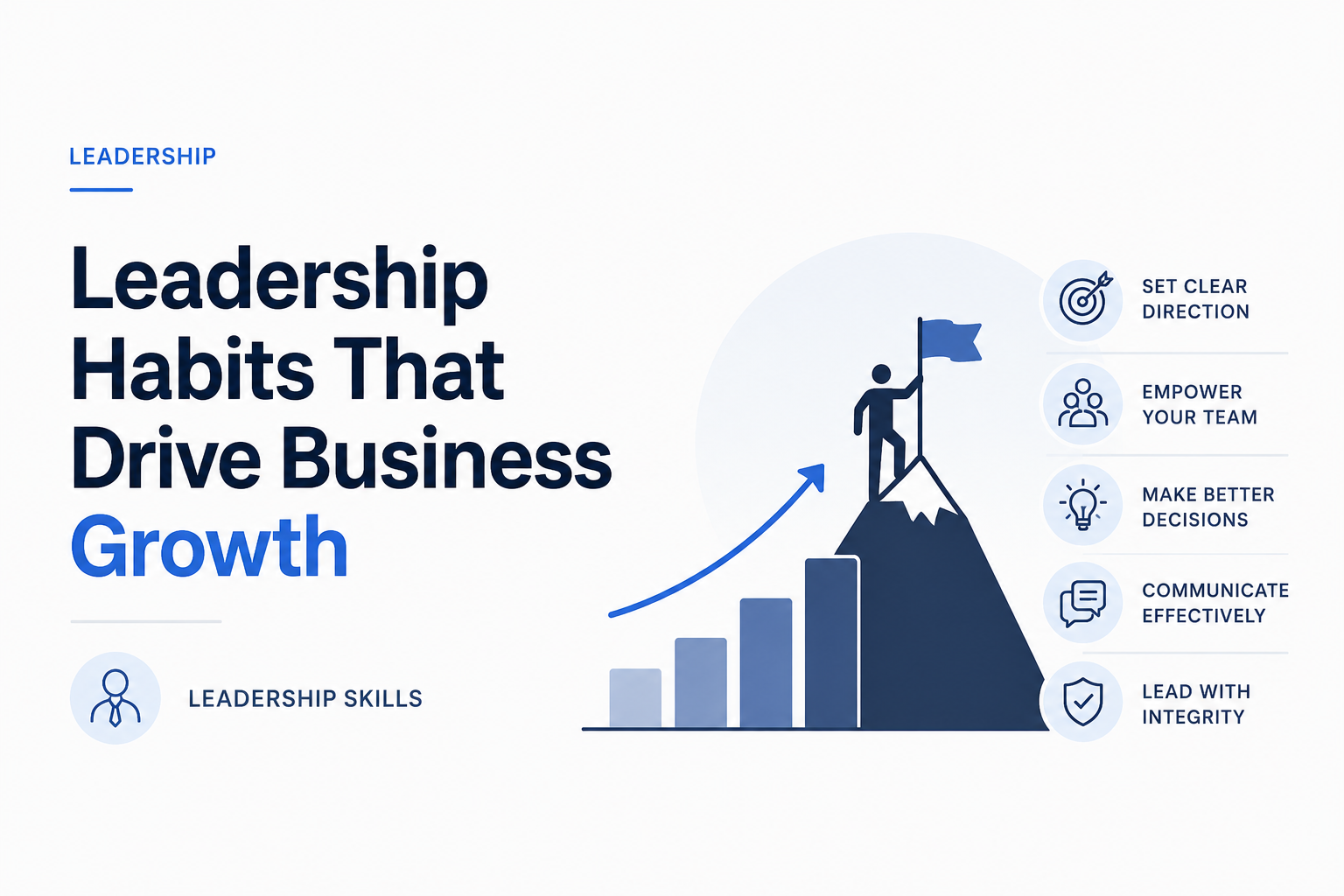
Discover the essential leadership skills and habits that drive business growth. Learn how effective leaders inspire teams, improve performance, and achieve long-term success.
Leadership Habits That Drive Business Growth
Strong leadership is one of the most important factors behind business success. While products, services, and technology play critical roles, effective leadership often determines whether a company thrives or struggles in a competitive marketplace.
Leaders influence company culture, employee engagement, decision-making, and strategic direction. By developing the right leadership skills and habits, business owners and managers can drive growth, improve productivity, and create sustainable success.
Why Leadership Skills Matter in Business
Leadership skills go beyond managing people. Effective leaders inspire teams, solve problems, adapt to change, and create a clear vision for the future.
Organizations with strong leadership often experience:
- Higher employee engagement
- Increased productivity
- Better decision-making
- Stronger customer satisfaction
- Improved innovation
- Sustainable business growth
As businesses face evolving market conditions, leadership has become a key competitive advantage.
Leadership Habits That Fuel Business Growth
1. Setting a Clear Vision
Successful leaders establish a clear vision that aligns employees around common goals.
A strong vision helps:
- Define company direction
- Improve team focus
- Increase motivation
- Support long-term planning
Employees are more likely to perform at their best when they understand the organization’s purpose and objectives.
2. Communicating Effectively
Communication is one of the most valuable leadership skills.
Effective leaders:
- Share expectations clearly
- Provide constructive feedback
- Encourage open discussions
- Listen actively to employees
Strong communication reduces misunderstandings and creates a culture of transparency and trust.
3. Making Data-Driven Decisions
Business leaders regularly face important decisions that impact growth and profitability.
Successful leaders rely on:
- Performance metrics
- Customer insights
- Market research
- Financial analysis
Using data helps minimize risks and supports smarter business decisions.
4. Empowering Employees
Great leaders trust their teams and encourage independent thinking.
Empowering employees can:
- Increase accountability
- Improve job satisfaction
- Encourage innovation
- Enhance productivity
When employees feel valued and trusted, they are more likely to contribute to business success.
5. Embracing Continuous Learning
Markets, technologies, and customer expectations constantly evolve.
Effective leaders invest in ongoing learning by:
- Attending industry events
- Reading business publications
- Participating in training programs
- Learning new technologies
Continuous development helps leaders remain adaptable and competitive.
6. Leading by Example
Employees often model the behavior of their leaders.
Leaders who demonstrate:
- Integrity
- Accountability
- Professionalism
- Commitment
create a positive workplace culture that supports growth and performance.
7. Encouraging Innovation
Innovation is essential for long-term business growth.
Successful leaders create environments where employees feel comfortable:
- Sharing ideas
- Experimenting with solutions
- Solving problems creatively
Businesses that encourage innovation are often better prepared for future challenges and opportunities.
8. Building Strong Relationships
Leadership is ultimately about people.
Strong leaders prioritize relationships with:
- Employees
- Customers
- Partners
- Investors
- Stakeholders
Trust-based relationships contribute to stronger collaboration and long-term business success.
9. Managing Change Effectively
Change is inevitable in today’s business environment.
Whether adopting new technology or entering new markets, leaders must help teams navigate transitions successfully.
Effective change management involves:
- Clear communication
- Employee support
- Strategic planning
- Continuous monitoring
Adaptable organizations are more likely to remain competitive.
10. Focusing on Customer Needs
Customer-focused leadership helps businesses stay aligned with market demands.
Successful leaders regularly evaluate:
- Customer feedback
- Service quality
- Market trends
- Consumer behavior
Understanding customer needs enables businesses to improve products, services, and overall customer experience.
Essential Leadership Skills for Modern Business Leaders
Strategic Thinking
Strategic leaders focus on long-term goals while balancing short-term priorities.
Emotional Intelligence
Understanding emotions and managing relationships effectively improves team dynamics and leadership effectiveness.
Problem-Solving
Business growth often depends on a leader’s ability to identify challenges and implement solutions quickly.
Adaptability
Flexible leaders respond effectively to changing market conditions and emerging opportunities.
Time Management
Strong time management allows leaders to focus on high-impact activities that drive results.
Common Leadership Mistakes That Limit Growth
Even experienced leaders can encounter challenges that hinder business performance.
Common mistakes include:
- Micromanaging employees
- Poor communication
- Avoiding difficult decisions
- Resisting change
- Ignoring employee feedback
- Failing to delegate responsibilities
Recognizing and addressing these issues can significantly improve organizational performance.
How Leadership Impacts Company Culture
Leadership directly shapes workplace culture.
Positive leadership promotes:
- Collaboration
- Accountability
- Innovation
- Employee engagement
- Professional development
A healthy company culture helps attract and retain talented employees while supporting business growth.
The Future of Leadership in Business
As technology continues to reshape industries, leadership responsibilities are evolving.
Future business leaders will increasingly need to:
- Lead remote and hybrid teams
- Manage digital transformation
- Utilize artificial intelligence tools
- Foster innovation
- Prioritize employee well-being
Organizations that develop strong leadership capabilities will be better positioned to succeed in an increasingly competitive marketplace.
Conclusion
Leadership skills play a critical role in driving business growth and long-term success. By developing habits such as effective communication, strategic thinking, continuous learning, and employee empowerment, leaders can build stronger teams and create sustainable competitive advantages.
Businesses that invest in leadership development are often more resilient, innovative, and prepared for future opportunities. In today’s rapidly changing business environment, strong leadership remains one of the most valuable assets any organization can possess.
